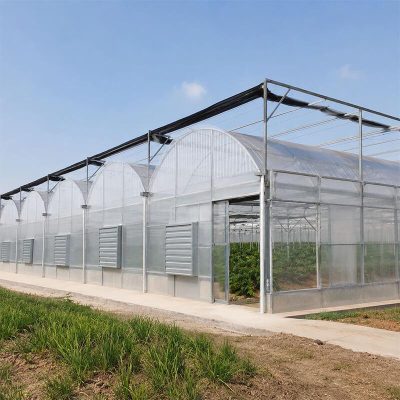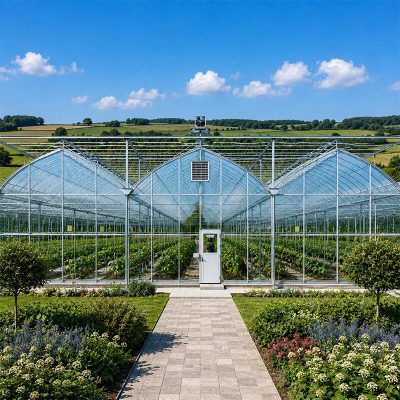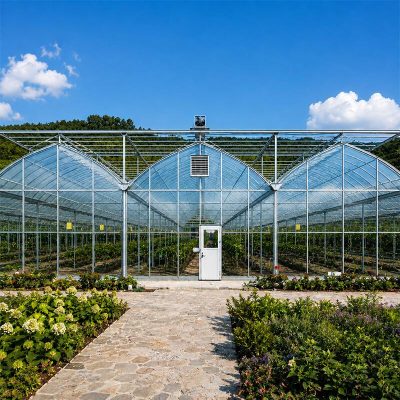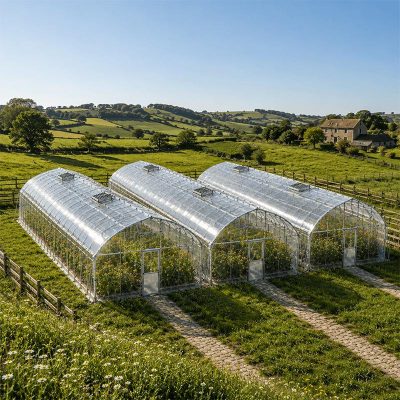







A sawtooth greenhouse is a greenhouse with an angled roof vent design that improves natural ventilation, heat release, and humidity control. Its roof structure allows hot air to rise and escape through upper vents, while fresh air enters from side openings. This design is especially suitable for hot, humid, tropical, and subtropical commercial farming areas.
For growers in warm climates, ventilation is one of the most important factors in greenhouse performance. Poor airflow can cause heat stress, high humidity, fungal disease pressure, weak crop growth, and unstable production quality. A sawtooth roof helps solve these problems by creating a natural path for hot and humid air to leave the greenhouse.
This guide explains what a sawtooth greenhouse is, how it works, its main types, suitable crops, ideal climates, design considerations, and common mistakes to avoid before starting a commercial greenhouse project.
What Is a Sawtooth Greenhouse
Basic Definition
A sawtooth greenhouse is a greenhouse structure with an angled or stepped roof profile. The roof includes raised ventilation openings that help remove hot air and moisture from inside the greenhouse.
Unlike a simple tunnel greenhouse or arch greenhouse, the sawtooth design is mainly created for natural ventilation. It is commonly used in areas where temperature and humidity control are important for crop growth.
This structure can be built in different forms, from a Single Span Sawtooth Greenhouse for smaller farms to a Multi Span Sawtooth Greenhouse for larger commercial production projects.
Main Structure and Roof Design
The main structure usually includes a galvanized steel frame, roof trusses or arches, side columns, roof vents, side vents, covering material, and optional systems such as shading, cooling, irrigation, and fertigation.
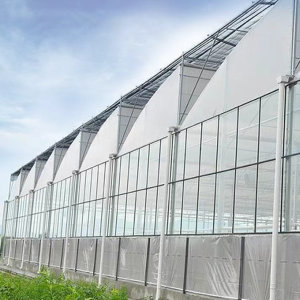
The roof vent is the key feature. It is usually located at the higher side of the angled roof. When hot air rises inside the greenhouse, it can escape through this upper opening. When side vents are also used, fresh air can enter from lower areas and push warm air upward.
Common covering materials include PE film, PO film, polycarbonate sheets, and sometimes glass. The right covering material depends on local climate, budget, crop requirements, and expected service life.
Why It Is Called a Sawtooth Greenhouse
It is called a sawtooth greenhouse because the roof shape looks similar to the teeth of a saw. The repeated angled roof sections create a stepped appearance.
This shape is not only for design style. The main purpose is to improve airflow, release heat, reduce humidity buildup, and create a better growing environment for crops.
How Does a Sawtooth Greenhouse Work
Natural Ventilation Principle
The working principle is based on natural air movement. Warm air is lighter than cool air, so it rises to the top of the greenhouse. When roof vents are open, this warm air can leave the structure.
At the same time, cooler outside air enters through side openings or lower vents. This creates a natural airflow cycle inside the greenhouse.
This process helps reduce heat accumulation and moisture buildup without depending completely on mechanical fans.
Hot Air Release Through Roof Vents
In warm climates, heat often collects near the top of the greenhouse. If this heat cannot escape, the internal temperature can rise quickly, especially during sunny afternoons.
The sawtooth roof vent gives hot air a clear exit path. This helps reduce heat stress and creates a more comfortable environment for crops.
For commercial growers, better heat release can also reduce the pressure on cooling systems such as exhaust fans, cooling pads, misting systems, and shading nets.
Fresh Air Intake Through Side Openings
Roof vents work best when the greenhouse also has well-designed side openings. Fresh air enters from the sides and moves through the crop area before rising toward the roof vents.
This airflow pattern helps refresh the growing environment and reduce stagnant air around plants.
If side vents are too small, blocked, or poorly positioned, the roof vents may not perform well. This is why roof ventilation and side ventilation should be designed together.
How Roof Direction Affects Airflow
Roof vent direction has a direct effect on ventilation performance. It should be designed according to local wind direction, rainfall, storm risk, and greenhouse orientation.
In some regions, roof vents should be positioned to support natural airflow. In rainy or windy regions, the design should also reduce the risk of rain entering the greenhouse.
This detail is important because a good sawtooth greenhouse is not just about roof shape. It must match the real climate conditions of the project site.

Key Benefits of a Sawtooth Greenhouse
Better Natural Ventilation
The most important benefit is better natural ventilation. The upper roof vents allow hot air to escape, while side vents help bring fresh air into the greenhouse.
This is useful for farms that want to improve airflow and reduce dependence on mechanical ventilation during warm seasons.
Lower Heat Accumulation
Heat buildup can reduce crop quality, slow plant growth, increase irrigation demand, and create stress during flowering or fruiting stages.
A sawtooth roof helps release hot air from the upper part of the greenhouse. This can make the growing environment more stable, especially in regions with strong sunlight or long hot seasons.
Improved Humidity Control
High humidity can increase the risk of fungal disease and weak plant growth. Crops with dense canopies, such as tomatoes, cucumbers, flowers, and leafy vegetables, are especially sensitive to poor airflow.
By improving air exchange, a sawtooth greenhouse can help reduce humid air buildup and support healthier crop development.
Reduced Cooling Pressure
In commercial farming, cooling can become a major operating cost. A sawtooth design does not completely replace fans or cooling pads in every climate, but it can reduce cooling pressure.
When natural ventilation works well, mechanical systems may operate more efficiently. This is especially useful in hot and humid regions where cooling demand is high.
Better Growing Environment for Crops
A stable greenhouse environment supports more consistent crop growth. Better airflow, lower heat buildup, and improved humidity control can help reduce plant stress.
For commercial vegetable farms, flower production, seedling nurseries, and hydroponic projects, this can make daily management easier and more predictable.
Main Types of Sawtooth Greenhouses
Triangular Sawtooth Greenhouse
A triangular sawtooth greenhouse has a sharper roof profile with clear angled roof sections. The ventilation opening is usually placed near the upper side of the roof.
This design can provide strong upward airflow, but it should be carefully planned to prevent rainwater from entering through the vent area.
Single Half Arch Sawtooth Greenhouse
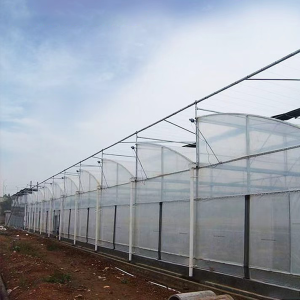
A single half arch sawtooth greenhouse combines an arched roof section with a raised ventilation side. It is commonly used in film-covered greenhouse projects.
This structure can provide a balance between simple construction and good ventilation performance. It is suitable for growers who want practical roof ventilation without a highly complex frame.
Double Half Arch Sawtooth Greenhouse
A double half arch design uses two curved roof sections with a raised ventilation area. It can provide more internal space and smoother roof lines while keeping the benefit of upper ventilation.
This type is often used for larger growing areas where both structure strength and airflow are important.
Single Span Sawtooth Greenhouse
A Single Span Sawtooth Greenhouse is a standalone structure with one independent span. It is suitable for smaller farms, trial planting areas, seedling nurseries, or separate growing zones.
It is easier to install and manage than a large multi-span system, but the planting area is more limited.
Multi Span Sawtooth Greenhouse
A Multi Span Sawtooth Greenhouse connects multiple spans together to create a larger commercial growing area. It is suitable for farms that need higher land use efficiency, larger production capacity, and more organized crop management.
For large projects, this structure can be combined with shading systems, cooling pads, exhaust fans, irrigation, fertigation, and hydroponic systems.


Sawtooth Greenhouse vs Traditional Greenhouse A Quick Comparison
A sawtooth greenhouse and a traditional greenhouse can both be used for commercial farming, but their ventilation logic is different. A sawtooth greenhouse uses angled roof vents to release hot air naturally, while a traditional greenhouse usually depends more on side vents, roof vents, fans, or cooling pads.
| Item | Sawtooth Greenhouse | Traditional Greenhouse |
|---|---|---|
| Roof Design | Angled roof with upper vents | Arch, tunnel, or gable roof |
| Ventilation | Strong natural roof ventilation | Depends more on side vents or fans |
| Heat Release | Better hot air discharge | May need stronger cooling support |
| Best Climate | Hot, humid, tropical, subtropical areas | Mild or seasonal growing areas |
For a deeper comparison, this topic can be covered in a separate full guide on sawtooth greenhouse vs traditional greenhouse design. This article focuses mainly on the definition, working principle, types, applications, and selection points of sawtooth greenhouses.
Sawtooth Greenhouse Applications
Vegetable Production
Vegetables such as tomatoes, cucumbers, peppers, lettuce, and leafy greens can benefit from good ventilation and humidity control.
In warm climates, a sawtooth greenhouse can help reduce heat stress and support more stable vegetable production.
Flower Growing
Flowers are sensitive to temperature, humidity, and air movement. Poor ventilation may affect flower quality and increase disease risk.
A well-ventilated sawtooth structure can help maintain better growing conditions for commercial flower production.
Seedling Nursery
Seedlings need stable temperature, moisture, and airflow. Young plants are sensitive to overheating and stagnant air.
A sawtooth greenhouse can help create a more balanced nursery environment when combined with shading, misting, and proper irrigation.
Hydroponic Farming
Hydroponic farming requires stable climate conditions because temperature, humidity, nutrient solution management, and airflow are closely connected.
A sawtooth greenhouse can be used for NFT systems, DWC systems, substrate cultivation, grow bags, and vertical growing systems.
Tropical and Subtropical Commercial Farming
In tropical and subtropical regions, growers often face high temperature, strong sunlight, and high humidity. The angled roof ventilation design is especially useful in these areas.
For commercial farms, better natural airflow can improve daily management and reduce climate-related risks.
What Crops Are Suitable for a Sawtooth Greenhouse
Leafy Vegetables
Leafy vegetables such as lettuce, spinach, herbs, and Asian greens can grow well when heat and humidity are controlled.
Better airflow helps reduce stress and supports healthier leaf development.
Tomatoes and Cucumbers
Tomatoes and cucumbers grow tall and often form dense canopies. This makes airflow especially important.
A Sawtooth Greenhouse For Tomato Planting can improve air movement around the crop canopy, especially when combined with trellising, drip irrigation, side ventilation, and shading.
Flowers
Flowers require consistent quality and stable growing conditions. High humidity and poor airflow can affect flower appearance and market value.
A sawtooth structure can help improve air exchange for flower crops in warm or humid regions.
Seedlings
Seedlings are sensitive to heat, humidity, and sudden environmental changes. A well-designed ventilation structure can reduce stress and support stronger seedling growth.
Hydroponic Crops
Hydroponic crops such as lettuce, herbs, tomatoes, cucumbers, and strawberries can be grown in a sawtooth structure when the greenhouse layout and climate system are properly designed.
For hydroponic projects, ventilation, water supply, drainage, fertigation, and internal layout should be planned together.

Where Is a Sawtooth Greenhouse Most Suitable
Hot and Humid Regions
A sawtooth greenhouse is especially suitable for areas where high temperature and humidity are common. The roof vents help remove hot and moist air from the upper space.
This can improve crop comfort and reduce the risk of disease caused by stagnant humidity.
Tropical Regions
In tropical regions, strong sunlight, heavy rain, and high humidity create challenges for crop production.
A sawtooth roof can improve air exchange while still protecting crops from direct weather impact when the design includes proper rain protection.
Subtropical Regions
Subtropical areas often have hot summers and mild winters. Growers in these regions may benefit from a greenhouse design that supports strong ventilation during warm months.
Areas with High Cooling Demand
If a farm requires frequent cooling, roof ventilation can reduce the pressure on mechanical systems.
This is especially useful for a Large Sawtooth Greenhouse, where cooling demand can be high because of the larger internal space and planting area.
How to Choose the Right Sawtooth Greenhouse Design
Local Climate
Local climate should be the first consideration. Temperature, humidity, rainfall, wind speed, sunlight, and storm risk all affect greenhouse design.
A sawtooth greenhouse in a humid coastal region may need different ventilation and structural details from one in a dry inland area.
Wind Direction
Wind direction affects how air enters and leaves the greenhouse. Roof vents and side openings should be arranged to support natural airflow.
Ignoring wind direction can reduce ventilation performance and may even create problems during storms.
Roof Vent Direction
Roof vent direction should help hot air escape while reducing the risk of rain entering the greenhouse.
This is especially important in regions with frequent rain, strong wind, or seasonal storms.
Span Width and Greenhouse Height
Span width and greenhouse height affect internal airflow, crop layout, and heat accumulation.
A greenhouse that is too low may not provide enough upper space for hot air to rise and escape efficiently. Larger spans may require stronger structure and more careful ventilation planning.
Covering Material
Common covering materials include PE film, PO film, polycarbonate sheet, and glass. The best choice depends on light transmission, heat control, durability, budget, and crop requirements.
For sawtooth structures, the covering material should work well with roof vents and frame design to prevent leakage, wind damage, or poor ventilation performance.
Crop Type and Planting Layout
Crop height, planting density, and growing system affect ventilation needs. Tall crops such as tomatoes and cucumbers usually need stronger airflow than low-growing crops.
Hydroponic layouts also require enough space for channels, pipes, tanks, walkways, and maintenance access.
Budget and Automation Level
An Economical Sawtooth Greenhouse can be designed for growers who need basic ventilation and crop protection. More advanced projects may include automatic vents, cooling pads, exhaust fans, shade systems, irrigation, fertigation, and climate sensors.
A Customizable Sawtooth Greenhouse should match the project’s real growing conditions instead of using one standard design for every farm.
Common Mistakes When Choosing a Sawtooth Greenhouse
Ignoring Local Wind Direction
One common mistake is choosing roof vent direction without checking local wind patterns. This can reduce ventilation performance or increase rain entry risk.
Wind direction should be reviewed before confirming the greenhouse orientation and roof vent layout.
Choosing Roof Vents Without Considering Rain Protection
Roof ventilation is useful, but poor vent design may allow rainwater to enter the greenhouse.
The design should balance ventilation performance with weather protection, especially in rainy or storm-prone regions.
Designing the Greenhouse Too Low
If the greenhouse is too low, hot air has less space to rise and collect before leaving through the roof vents.
Proper greenhouse height helps improve heat release and crop comfort.
Only Comparing Price Instead of Long Term Performance
A lower price may look attractive at first, but it does not always mean better value.
Growers should also consider ventilation performance, cooling cost, maintenance, structure strength, covering material, crop stability, and service life.
Sawtooth Greenhouse Project Design Considerations
For commercial greenhouse projects, the best design should be based on climate, crop type, growing area, wind direction, ventilation demand, budget, and automation level.
A good sawtooth greenhouse plan should consider structure strength, roof vent direction, side ventilation, covering material, cooling system, shading system, irrigation layout, and future maintenance.
For vegetable production, flower growing, seedling nurseries, and hydroponic farming, the goal is not simply to choose a special roof shape. The goal is to build a greenhouse that supports stable production under real local conditions.
Before confirming the final design, growers should prepare basic project information, including location, crop type, greenhouse size, local temperature range, humidity level, rainfall, wind conditions, and expected production model. These details help determine whether a single span, multi span, economical, or more advanced customized structure is more suitable.

Frequently Asked Questions
1.What is a sawtooth greenhouse
A sawtooth greenhouse is a greenhouse with an angled roof vent design that improves natural ventilation, heat release, and humidity control.
2.How does a sawtooth greenhouse work
It works by allowing hot air to rise and escape through roof vents while fresh air enters through side openings.
3.What is the purpose of the sawtooth roof
The purpose is to improve airflow, release heat, reduce humidity buildup, and create a better growing environment for crops.
4.Is a sawtooth greenhouse good for hot climates
Yes. It is often suitable for hot, humid, tropical, and subtropical climates because the roof vents help release heat naturally.
5.What are the types of sawtooth greenhouses
Common types include triangular, single half arch, double half arch, single span, and multi span designs.
6.What crops can grow in a sawtooth greenhouse
Leafy vegetables, tomatoes, cucumbers, flowers, seedlings, and hydroponic crops can grow well when the structure and systems are properly designed.
7.Can a sawtooth greenhouse be used for hydroponics
Yes. It can be used for NFT systems, DWC systems, substrate cultivation, grow bags, vertical systems, and other hydroponic layouts.
8.What covering material is used for a sawtooth greenhouse
Common materials include PE film, PO film, polycarbonate sheet, and glass. The best choice depends on climate, crop type, budget, and expected service life.
Conclusion
A sawtooth greenhouse is designed to improve natural ventilation, heat release, and humidity control through its angled roof vent structure. It is especially useful in hot, humid, tropical, and subtropical commercial farming regions.
Its main value is not only the roof shape, but the airflow performance behind the design. By helping hot air leave through upper vents and allowing fresh air to enter from the sides, this greenhouse type can create a more stable environment for vegetables, flowers, seedlings, tomatoes, cucumbers, and hydroponic crops.
The right design should be selected according to local climate, wind direction, crop type, roof vent layout, greenhouse size, covering material, budget, and automation level. For commercial growers, a properly designed sawtooth structure can support more stable crop production and better long-term greenhouse performance.