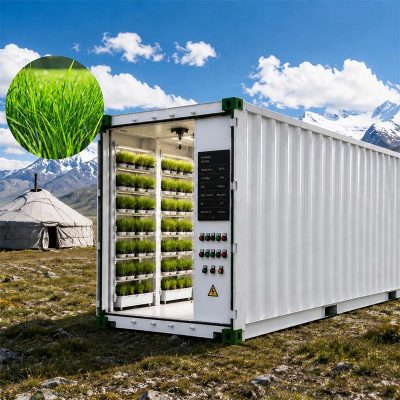







A container farm is a compact controlled-environment agriculture facility. It combines hydroponic circulation, LED lighting, climate control, electrical distribution, sensors, automation, and sanitation in a confined workspace.
Because these systems are connected, a small maintenance problem can become a crop, safety, or production problem if it is ignored.
A reliable maintenance program is not simply a list of tasks. It is a repeatable operating system that tells the team:
- what to inspect;
- what normal operation looks like;
- what to record;
- when to stop and escalate; and
- which parts should be cleaned, calibrated, repaired, or replaced.
The exact maintenance intervals depend on the container design, crop, local climate, water quality, operating hours, and equipment manuals. Use this checklist as a planning framework, then align it with the final system documentation and supplier instructions.

1. Set Up the Maintenance Baseline Before Planting
Maintenance becomes much easier when the operator starts with a defined baseline instead of trying to remember what was normal after a problem occurs.
Create an Asset and Setpoint Register
Record the main equipment in one controlled document:
- growing racks and hydroponic channels;
- nutrient tanks, pumps, filters, valves, and drains;
- LED fixtures, drivers, timers, and control panels;
- air-conditioning, ventilation, heating, and dehumidification equipment;
- sensors for temperature, humidity, water level, pH, EC, flow, and alarms;
- electrical protection, backup power, and emergency shutoff devices.
For each asset, record the model, serial number, installation date, manual, warranty contact, normal operating range, and spare-part reference.
The crop recipe should also identify the approved environmental and nutrient ranges. Do not copy a generic pH, EC, temperature, or humidity value into every crop plan. Use the agronomist’s recipe and the actual equipment limits.
Establish a Normal Operating Baseline
During commissioning, capture readings when the system is clean, full, and operating normally.
Useful baseline records include:
- pump flow and return behavior;
- temperature and humidity at representative rack positions;
- water level, pH, EC, and reservoir temperature;
- LED schedule and controller status;
- HVAC current draw or alarm history where available;
- time required for routine cleaning and inspection.
The baseline is not a performance guarantee. It is a reference for detecting changes in the same installation.
If the unit has not yet been commissioned, review the container farm installation guide and prepare the handover checklist before starting commercial production.
2. Daily Container Farm Maintenance Checklist
Daily checks should be short, consistent, and recorded at the same stage of the production cycle.
A second inspection may be appropriate during hot weather, a new crop cycle, or the first days after a repair.
Inspect the Crop and Growing Environment
Walk through every growing level and look for changes that a dashboard may not show clearly:
- wilted, leaning, discolored, or uneven plants;
- blocked channels, standing water, leaks, or wet flooring;
- condensation on walls, doors, ducts, or electrical enclosures;
- unusual noise, vibration, odor, or heat from equipment;
- pest or disease indicators;
- blocked air paths or plants touching lights and fans.
Record the affected rack, level, time, and photograph when useful.
“The crop looks abnormal” is difficult to troubleshoot. “Rack 2, level 3, left channel, low flow at 08:20” is much more useful for corrective action.
Check Water, Nutrients, and Circulation
Confirm the reservoir level, visible flow, return path, pump status, and alarm status.
Check the crop recipe’s required pH and EC range using a calibrated instrument or the approved monitoring system.
If a reading is unexpected:
- verify that the probe is clean and within its calibration period;
- check the sample and reservoir condition;
- compare the reading with a second approved instrument when the decision is significant; and
- investigate dilution, evaporation, dosing, leaks, or poor circulation before adding chemicals.
Do not correct a large deviation by repeatedly adding nutrients based on one unverified sensor reading. This can create a second imbalance and make the root-zone problem more difficult to diagnose.
Check Climate Control and Lighting
Review temperature, humidity, alarms, and operating mode.
Look for:
- blocked filters;
- unusual condensate;
- icing;
- fan noise;
- equipment that runs continuously without reaching its target;
- damaged LED fixtures or drivers.
Confirm that the LED schedule is active and that no fixture is visibly damaged.
The correct target is crop- and design-specific. The maintenance task is to identify deviation from the approved recipe and equipment range, not to apply a universal setting.
Clean High-Contact and Wet Areas
Remove plant debris, standing water, spilled nutrients, and packaging from the operating area.
Keep drains clear and electrical components dry.
Follow the approved sanitation chemical, concentration, contact time, and rinse procedure. Do not mix chemicals without a documented safety procedure.
3. Weekly Preventive Maintenance Checklist
Weekly work should be scheduled rather than performed only after a failure.
Assign each task to a responsible person and record completion, observations, and follow-up action.
Inspect Pumps, Filters, Pipes, and Drains
Check:
- pump sound;
- vibration;
- fittings;
- seals;
- filter condition;
- pipe supports;
- valve position;
- drain flow.
Compare the observed behavior with the commissioning baseline.
A gradual reduction in flow can indicate:
- filter loading;
- a partially closed valve;
- air entry;
- biofilm;
- pump wear; or
- a sensor problem.
Clean or replace filters according to the equipment manual and water-quality conditions.
Do not select a replacement filter only by physical size. Confirm the rating, material compatibility, flow requirement, and food-production suitability.
Review Nutrient and Sanitation Records
Look for repeated corrections rather than isolated readings:
- repeated pH drift after dosing;
- EC changes that do not match water addition or crop uptake;
- rising water temperature;
- recurring algae, biofilm, or root debris;
- repeated low-flow or low-level alarms.
Patterns often indicate a design, calibration, water-quality, or operating issue that a one-time cleaning will not solve.
Inspect LED Fixtures and Airflow Paths
Clean dust from approved surfaces without spraying liquid into fixtures or drivers.
Check:
- mounting;
- cable routing;
- heat dissipation;
- uniformity of operation;
- rack clearance;
- return-air paths;
- access panels.
Confirm that plants, packaging, or tools have not blocked ventilation or maintenance access.
Check Doors, Seals, Insulation, and Work Areas
Inspect:
- door seals;
- hinges;
- latches;
- floor drains;
- wall penetrations;
- cable glands;
- visible insulation damage.
Air leakage or water ingress can increase climate-control demand and create hygiene or electrical risks.
Repair methods must match the container construction and the supplier’s approved materials.
4. Monthly and Scheduled Maintenance
Monthly tasks should be combined with the equipment manufacturers’ hour-based or seasonal service intervals.
A calendar reminder is useful, but the actual trigger may be:
- operating hours;
- filter pressure;
- alarm frequency;
- water quality;
- climate conditions; or
- equipment performance.
Verify Sensors and Alarms
Check:
- sensor condition;
- cable connections;
- displayed values;
- alarm thresholds;
- notification paths.
Cross-check critical readings with a calibrated reference instrument according to the operating procedure.
Record:
- calibration date;
- reference standard;
- result;
- corrective action.
An alarm that appears on screen but never reaches the responsible operator is not an effective alarm system.
Test the notification route and escalation contact after changes to Wi-Fi, controllers, or user permissions.
Service Climate-Control Equipment Safely
Inspect or service filters, coils, condensate paths, fans, guards, and electrical connections according to the equipment manual.
Electrical work, refrigerant work, and high-voltage inspection should be performed by qualified personnel under applicable local safety procedures.
Keep a record of:
- abnormal current;
- repeated cycling;
- temperature recovery time;
- condensate behavior;
- unusual vibration or noise.
These signs can provide an earlier warning than a complete HVAC failure.
Test Backup and Emergency Procedures
Confirm that the following procedures are understood by the team:
- emergency shutoff;
- leak response;
- fire protection;
- backup power;
- manual operating procedures;
- crop protection during equipment failure.
A backup generator or battery system must be sized and tested for the actual critical loads.
Do not assume that backup power can support the full farm indefinitely.
Review the Maintenance Log as an Operating Dataset
At least monthly, review:
- downtime and alarm events;
- recurring repairs;
- filter and consumable usage;
- energy and water changes;
- cleaning completion;
- crop-quality deviations;
- supplier service requests.
The purpose is to identify repeat failures and update the preventive schedule.
If the same alarm appears three times, the correct response may be a root-cause investigation rather than three separate resets.
5. Troubleshooting by Symptom
The Nutrient Solution Is Drifting Out of Range
Check:
- probe calibration;
- sample method;
- dosing-pump operation;
- water source;
- reservoir mixing;
- crop uptake;
- evaporation.
Confirm whether the issue is a true process change or a measurement error before changing the recipe.
Humidity Remains High or Condensation Appears
Check:
- crop transpiration;
- air movement;
- dehumidification capacity;
- door opening;
- insulation;
- drain paths;
- sensor position.
Condensation near electrical equipment requires immediate risk assessment and safe isolation where necessary.
Flow Is Weak on One Rack
Inspect:
- filter condition;
- valve position;
- pump inlet;
- channel slope;
- pipe blockage;
- air lock;
- return line.
Compare the affected rack with a normal rack before changing the pump setting.
Growth Is Uneven Between Levels
Compare:
- light distribution;
- airflow;
- temperature;
- nutrient flow;
- planting density;
- access patterns;
- handling practices.
Uneven growth is rarely solved by changing one setpoint without checking physical uniformity.
The Same Alarm Keeps Returning
Record:
- time;
- operating conditions;
- alarm code;
- recent maintenance work;
- action taken;
- measured values.
Escalate with the complete log instead of repeatedly clearing the alarm.
The supplier may need the controller export, photographs, model number, and measured values to diagnose the issue efficiently.
6. Illustrative Planning Example: Estimating Routine Operator Time
Status: Hypothetical planning example, not a reported Aurlant customer result.
Assume one 40-foot leafy-green container with two operator rounds per day.
For planning only, use:
- 20 minutes for each daily round;
- 90 minutes for the weekly cleaning and inspection block;
- 2 hours for the monthly sensor, safety, and equipment review;
- 4.33 weeks per month.
The estimated weekly labor time is:
Daily rounds: 0.67 hours/day × 7 = 4.69 hours/week
Weekly block: 1.50 hours/week
Monthly block: 2.00 ÷ 4.33 = 0.46 hours/week
Illustrative total: 4.69 + 1.50 + 0.46 = 6.65 operator hours/week
This example helps a project team reserve labor capacity.
It does not predict Aurlant’s service time, crop output, labor cost, or production result.
Actual time depends on:
- number of racks;
- crop;
- sanitation protocol;
- water quality;
- automation;
- local regulations; and
- final equipment configuration.
7. What to Include in a Supplier Handover and Quotation Brief
When requesting a configuration review or quotation, provide enough information for the supplier to evaluate the maintenance workload as well as the purchase price.
Provide:
- container size and number of units;
- target crop and production cycle;
- project location and seasonal climate;
- electricity capacity;
- voltage;
- backup-power expectations;
- local energy price;
- water source and basic water-quality information;
- desired automation and remote monitoring;
- local operator skill level;
- service-access conditions;
- sanitation requirements;
- spare-parts expectations;
- training requirements;
- required response time.
For a new project, review the commercial hydroponic container farm system together with the maintenance requirements, rather than treating the system as a standalone equipment list.
A suitable configuration should balance:
- crop requirements;
- maintenance access;
- cleanability;
- replacement parts;
- energy use;
- operator skill;
- safety procedures; and
- long-term serviceability.

Conclusión
A container farm maintenance checklist should connect daily observation with weekly preventive work, scheduled equipment service, and a clear escalation process.
The most important habits are:
- consistent records;
- calibrated measurements;
- clean water and work areas;
- safe electrical procedures;
- regular inspection of pumps and climate equipment; and
- early investigation of repeated alarms.
Maintenance intervals and setpoints must be adapted to the crop, climate, water quality, equipment manuals, and final project design.
If you are planning a new unit, send the crop, container, climate, utility, automation, and operator requirements with your inquiry so the system and its maintenance workload can be evaluated together.
PREGUNTAS FRECUENTES
How Often Should a Container Farm Be Inspected?
Perform basic crop, water, climate, lighting, and alarm checks daily.
Schedule deeper pump, filter, sanitation, sensor, safety, and equipment inspections weekly or monthly according to the system design and manufacturer instructions.
What Is the Most Important Daily Check in a Hydroponic Container Farm?
There is no single universal check.
Confirm that water is circulating, the reservoir and crop-recipe readings are credible, climate and lighting systems are operating, and no leak, condensation, alarm, or crop abnormality requires escalation.
How Often Should pH and EC Sensors Be Calibrated?
Use the sensor manufacturer’s procedure and the farm’s approved quality plan.
Calibration frequency depends on sensor type, water quality, operating hours, cleaning frequency, and how quickly readings drift.
Record every calibration and investigate unexpected changes instead of relying only on a calendar reminder.
What Spare Parts Should a Container Farm Keep on Site?
The list depends on the installed equipment and local service access.
Typical planning categories include:
- approved filters;
- pump seals or a replacement pump;
- sensor consumables;
- fuses and protective devices;
- tubing and fittings;
- LED or driver replacement options;
- sanitation supplies.
Confirm exact part numbers with the supplier.
Can Maintenance Be Fully Automated?
Monitoring and alerts can be automated, but physical inspection, cleaning, calibration, sanitation, safety checks, and root-cause decisions still require trained operators.
Automation should support a documented maintenance process, not replace it.