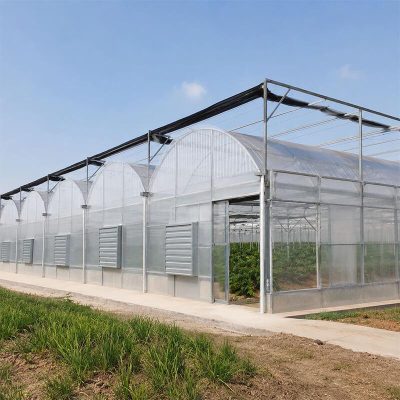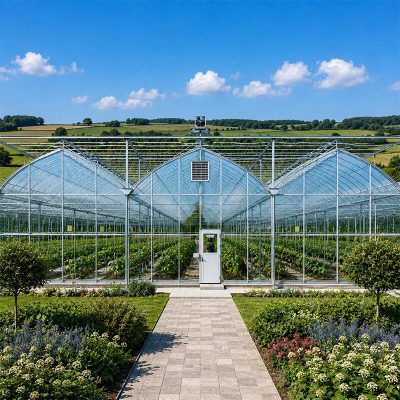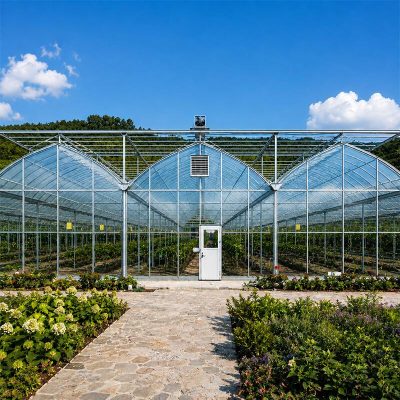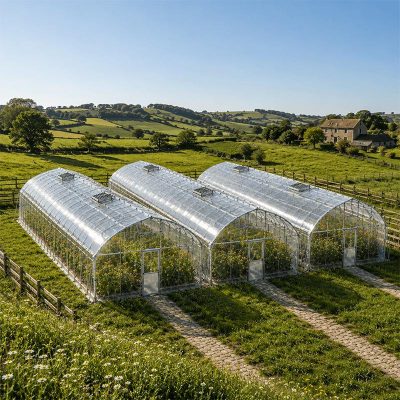






Modern greenhouse farming can improve commercial production by giving growers more control over the conditions that influence crop growth, quality, and supply timing.
However, a greenhouse does not automatically guarantee higher yield or profit. The result depends on crop selection, climate design, irrigation, nutrition, layout, labor, energy, sanitation, and market demand.
The most useful way to evaluate modern greenhouse farming benefits is to connect each technical feature with a measurable production objective. This means asking not only whether a greenhouse has automation or cooling equipment, but also whether the system helps produce more saleable crops, reduce quality variation, extend the production season, or meet a reliable delivery schedule.
What Modern Greenhouse Farming Means in Commercial Production
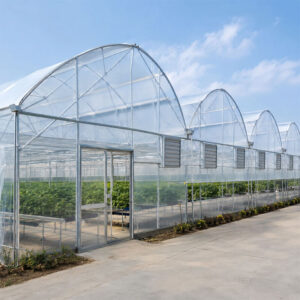
Modern greenhouse farming is a controlled-environment production method that combines a greenhouse structure with systems for climate management, irrigation, fertigation, crop support, monitoring, and daily operation.
Depending on the crop and project requirements, a modern greenhouse may include:
- single-span or multi-span structures;
- film, polycarbonate, glass, or other covering systems;
- roof and side ventilation;
- exhaust fans and cooling systems;
- heating equipment;
- shading or blackout screens;
- drip irrigation, NFT, Dutch bucket, or other growing systems;
- fertigation and water-treatment equipment;
- temperature, humidity, light, pH, and EC sensors; and
- controllers for irrigation and climate functions.
The difference between a basic protected structure and a modern greenhouse is not simply the number of devices installed. It is the way those devices work together to support a defined crop and production plan.
For an overview of climate control, automation, and smart greenhouse systems, readers can also review this guide to modern greenhouse technology and automation.
How Greenhouse Control Influences Saleable Yield
Yield should be evaluated as saleable output, not only as the total weight or number of plants harvested.
A useful commercial view separates:
- total biological production;
- marketable or saleable production;
- rejected or downgraded crops;
- crop losses during production; and
- products that cannot be delivered on schedule.
A greenhouse may improve business performance even when the total biological yield does not increase dramatically, if it reduces crop loss, improves uniformity, or increases the percentage that meets buyer specifications.
Temperature and humidity management
Temperature affects plant development, flowering, fruit setting, respiration, and crop timing. Humidity affects transpiration, disease pressure, condensation, and root-zone conditions.
Modern greenhouse systems can combine ventilation, cooling, heating, shading, and sensors to reduce extreme fluctuations. This does not eliminate climate risk, but it gives the grower more ways to respond to changing conditions.
The correct temperature and humidity range is crop-specific. A tomato crop, lettuce crop, strawberry crop, and ornamental crop should not automatically use the same climate settings.
More consistent irrigation and nutrition
Uneven water delivery can create uneven crop growth. Overwatering may reduce root-zone oxygen and increase disease risk, while insufficient irrigation can cause stress and poor development.
Drip irrigation, hydroponic channels, fertigation, filtration, and monitoring can help deliver water and nutrients more consistently. The final performance depends on water quality, hydraulic design, crop recipe, maintenance, and operator accuracy.
Better use of growing space
Greenhouse yield is influenced by how effectively the available area is used. The layout must balance plant density with light distribution, air movement, worker access, harvest paths, and equipment maintenance.
High density is not always better. If plants are too crowded, airflow may decrease and disease pressure may increase. A productive layout is one that supports both crop performance and repeatable daily operation.
Reduced exposure to weather events
Open-field crops may be exposed to heavy rain, wind, hail, frost, heat waves, and sudden temperature changes. A greenhouse reduces direct exposure to some of these risks.
The level of protection depends on the structure, covering, ventilation, drainage, anchoring, climate system, and local weather conditions. A greenhouse should be designed for the actual climate rather than treated as a universal weather-proof solution.
How Modern Greenhouses Improve Crop Quality
Crop quality is often more important than maximum biological output. Commercial buyers may evaluate size, color, freshness, cleanliness, firmness, uniformity, shelf life, and delivery consistency.
Uniform growing conditions
When plants receive more consistent light, water, nutrition, and temperature, the crop may develop more uniformly. Uniformity can simplify grading, packaging, harvesting, and customer delivery.
Uniform conditions still require correct crop management. A greenhouse cannot correct unsuitable varieties, poor seedling quality, incorrect spacing, or neglected sanitation.
Improved root-zone management
In soil, substrate, and hydroponic systems, the root zone must receive suitable water, oxygen, nutrients, and temperature conditions.
Modern irrigation and fertigation systems can help operators monitor and adjust the root-zone environment. The correct settings depend on crop stage, growing medium, water chemistry, climate, and the approved production recipe.
Improved airflow and humidity control
High humidity and stagnant air can increase disease pressure. Roof vents, side vents, circulation fans, exhaust systems, spacing, and climate controls can improve air movement when properly selected and operated.
Increasing ventilation alone may not solve every humidity problem. The design must also consider irrigation volume, plant transpiration, condensation, drainage, outdoor humidity, and temperature differences.
Cleaner and more manageable production areas
Protected production areas can reduce direct contact with field soil, mud, and some outdoor contaminants. Hydroponic and substrate systems may also make sanitation routines easier to standardize.
Greenhouse sanitation still requires discipline. Floors, benches, channels, tools, tanks, trays, drains, and work areas should have defined cleaning and inspection procedures.
How Greenhouses Support Year-Round Production
Year-round production means more than keeping plants alive through all seasons. It requires a crop calendar, suitable climate-control capacity, reliable utilities, maintenance planning, and a market that can absorb the production.
Cold-climate considerations
Cold regions may require heating, insulation, thermal screens, double-layer covering, or improved air sealing. Heating demand depends on outdoor temperature, greenhouse volume, covering performance, crop requirements, wind, and operating schedule.
Heating equipment should be sized using local climate information and the approved indoor conditions. A generic heating capacity cannot be applied safely to every location.
Hot-climate considerations
Hot regions may require roof ventilation, side ventilation, exhaust fans, cooling pads, shading, insulation, or other heat-management measures.
Cooling performance depends on outdoor temperature, humidity, airflow, water availability, greenhouse orientation, covering, crop density, and maintenance. A cooling system that works in a dry climate may not provide the same result in a hot and humid climate.
Shoulder-season planning
Many production problems occur during seasonal transitions rather than during the most extreme weather. The greenhouse may need different ventilation, heating, irrigation, or shading settings during spring and autumn.
Operators should prepare a seasonal operating schedule rather than use one fixed setting throughout the year.
Staggered planting and delivery planning
Continuous supply usually requires staggered planting or crop scheduling. The schedule should connect:
- seedling production;
- transplanting;
- vegetative growth;
- flowering or fruit development where relevant;
- harvest windows;
- cleaning and crop replacement; and
- buyer delivery dates.
Year-round production is therefore an operating system, not simply a structural feature.
Illustrative Planning Example: Measuring the Commercial Benefit
Important: This is an illustrative planning example, not a real customer project, production guarantee, or Aurlant performance claim.
Assume a hypothetical commercial leafy-green project with the following planning assumptions:
- gross greenhouse area: 1,000 m²;
- initial productive-area allowance: 70%;
- estimated growing area: 700 m²;
- illustrative crop cycle: 6 weeks;
- illustrative shipment target: 2,000 saleable heads per week; and
- crop losses, spacing, labor, and market demand: still to be verified.
The theoretical standing-crop requirement can be represented as:
Weekly shipment target × crop-cycle weeks = theoretical standing requirement
Using the illustrative numbers:
2,000 heads per week × 6 weeks = 12,000 planting positions
This does not mean that the greenhouse will automatically produce 12,000 saleable heads. The calculation only shows how a commercial target can be translated into a planning requirement.
The project team would still need to verify:
- actual planting density;
- aisle and service-space requirements;
- nursery capacity;
- crop survival rate;
- harvest and packing capacity;
- water and nutrient availability;
- labor per production cycle;
- energy and climate-control requirements; and
- confirmed market demand.
The more useful performance indicators would include saleable heads per square meter, rejection rate, average crop-cycle duration, delivery fulfillment rate, water use, energy use, labor hours, and maintenance downtime.
Which Systems Create the Biggest Practical Benefits?
Different greenhouse systems create different benefits and operating responsibilities.
Climate-control systems
Ventilation, cooling, heating, shading, and humidity management can help maintain a more suitable growing environment. Their value depends on climate data, crop sensitivity, utility reliability, and correct operation.
Irrigation and fertigation systems
Controlled irrigation and fertigation can improve water and nutrient consistency. The design should include source water, filtration, storage, pumps, pressure, distribution zones, drainage, monitoring, and cleaning.
Hydroponic systems
Hydroponics can improve control over water and nutrient delivery in suitable crops and projects. It also increases the importance of water quality, sanitation, sensor calibration, backup planning, and operator training.
Automation and sensors
Automation can reduce repetitive manual work and provide earlier warnings when conditions change. It does not remove the need for human inspection, maintenance, calibration, or crop knowledge.
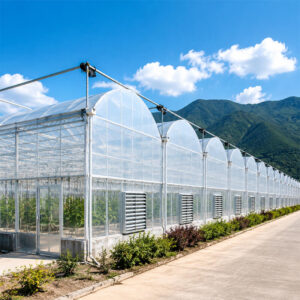
For larger vegetable projects, growers can compare suitable commercial multi-span greenhouse systems according to crop, climate, land, utility, and expansion requirements.
How to Measure Whether Greenhouse Improvements Are Working
A project should define its measurement method before installation. Otherwise, the owner may invest in equipment without knowing whether it improved the business result.
| Indicator | What it measures | Important limitation |
|---|---|---|
| Saleable yield | Crop that meets buyer requirements | Must be separated from total biological yield |
| Rejection rate | Crop lost or downgraded before sale | Causes may include crop, harvest, packing, or market issues |
| Crop-cycle duration | Time from planting to harvest | Depends on variety, season, climate, and management |
| Delivery fulfillment | Ability to supply the agreed volume and timing | Requires accurate sales and production records |
| Resource use | Water, energy, fertilizer, and labor per saleable unit | Must be compared under similar production conditions |
| Downtime | Time lost because of equipment or utility problems | Requires reliable maintenance and incident records |
These indicators help determine whether the greenhouse is improving the actual commercial outcome instead of only adding more equipment.
Project Factors That Can Reduce the Expected Benefit
Modern greenhouse farming has advantages, but the technology can underperform when the project is poorly planned.
- Choosing the greenhouse before confirming the crop: The structure may not match plant height, density, climate, or workflow.
- Using generic climate settings: Local weather and crop requirements must be considered together.
- Ignoring electricity and water: Climate and irrigation systems depend on reliable utilities.
- Overbuilding: Extra automation may increase capital and maintenance costs without improving the commercial result.
- Underestimating labor: Harvesting, sanitation, packing, monitoring, and maintenance still require trained people.
- Leaving no maintenance access: A system that is difficult to inspect may create longer downtime.
- Assuming structure equals production: Crop management, market demand, seed quality, and operating discipline remain essential.
What to Prepare Before Requesting a Greenhouse Configuration
A supplier or engineering team can provide a more useful recommendation when the project brief includes:
- country, city, and site coordinates;
- available land dimensions;
- crop and variety;
- growing method;
- production and delivery target;
- local climate information;
- water source and water-quality report;
- available electricity;
- drainage conditions;
- preferred automation level;
- packing and storage requirements;
- installation and commissioning expectations; and
- future expansion plans.
If any value is not confirmed, mark it TBC instead of using a fabricated number. Final crop capacity, climate equipment, irrigation design, energy consumption, and investment analysis require project-specific information.

Conclusion
Modern greenhouse farming can improve commercial agriculture by making climate, irrigation, nutrition, layout, and production scheduling more controllable.
The main business benefits may include higher saleable output, more consistent quality, reduced weather-related loss, longer production seasons, and more reliable customer supply. These benefits are not automatic. They depend on correct crop selection, site conditions, utilities, system design, operation, maintenance, and market demand.
The best evaluation method is to connect each greenhouse feature with a measurable result. Before investing, define the crop, target market, climate requirements, water and power conditions, production schedule, labor plan, and success indicators.
Frequently Asked Questions
Does modern greenhouse farming always increase yield?
No. A modern greenhouse can improve growing control and reduce certain production risks, but actual yield depends on crop variety, climate, irrigation, nutrition, spacing, sanitation, labor, and management quality.
Is saleable yield more important than total yield?
For most commercial growers, yes. Saleable yield reflects the crop that meets buyer requirements after losses, damage, quality grading, and rejection are considered.
Can a greenhouse support production throughout the year?
It can support longer or year-round production when the structure, heating, cooling, ventilation, shading, irrigation, crop calendar, utilities, and market plan are suitable for the location.
Does modern greenhouse farming require hydroponics?
No. Modern greenhouses can use soil, substrate, drip irrigation, NFT, Dutch buckets, or other growing systems. The correct choice depends on crop, water, climate, labor, investment, and operating objectives.
What should be checked before investing in a modern greenhouse?
Check the crop and market, site, climate, land, electricity, water quality, drainage, structure, irrigation, climate control, labor, maintenance, installation scope, operating cost, and future expansion plan.